
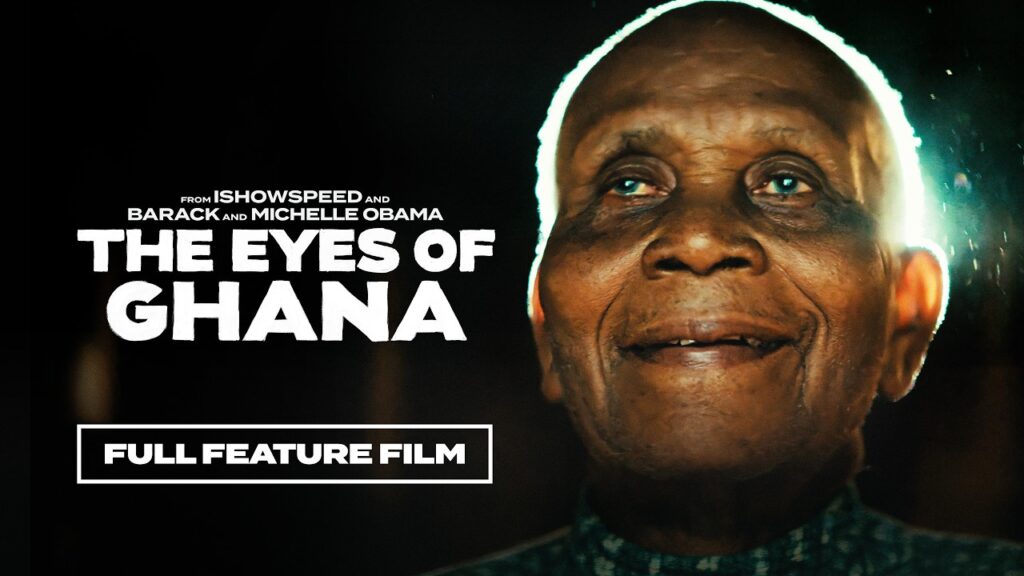
The Eyes of Ghana: Preserving Elmina’s Living Heritage
Through Our Own Eyes: Pride, Memory, and the Urgency of Holding the Archive
High above the clouds in February 1966, aboard an aircraft returning from Hanoi, Kwame Nkrumah turned to the young Ghanaian cameraman seated beside him, Rev. Dr. Chris Tsui Hesse, and asked a quiet, unforgettable question: “Young man, do you know the meaning of a coup?”
It is one of the most arresting moments in the documentary The Eyes of Ghana. For decades, Nkrumah has lived in our collective imagination as bronze statue, political symbol, and towering myth. Yet in that single, unguarded exchange, preserved in memory by the man who filmed him, the myth falls away, leaving behind a deeply human figure in a moment of profound vulnerability.
That is the quiet power of seeing our history through our own lens. The Eyes of Ghana is more than a film about rescuing decaying reels of early independence footage; it is a mirror held up to a nation. Watching Ghana’s early decades unfold through Chris Hesse’s camera stirs an unapologetic pride in who we are: our culture, our heritage, our humour, our elegance, and the distinct personality that makes this country ours.
Whose Story Is It?
We often speak of history, yet the word itself carries a revealing question: his story. Whose story is being told? Who is telling it, and to whom?
For far too long, Ghana’s history books and public narratives have been written and curated by the West. As the African proverb reminds us, when the story is always told by the hunter, the tale shall always favour the hunter. When we leave our past in the hands of others, we risk seeing ourselves distorted, or erased altogether.
The Eyes of Ghana lays bare just how dangerous that erasure can be. Through the documentary, viewers confront how the CIA managed to manipulate elements within Ghana to orchestrate the 1966 coup, and how a sustained campaign convinced many to buy into the idea that Nkrumah was simply evil. One has to ask: why was there an immediate order to ban his books, destroy his records, and scrub his name from public life? Because those who wish to control a people know a simple truth: when you erase a person’s records, their memory eventually dies off.
From Newsreels to Digital Archives
Nkrumah himself understood the power of media better than almost anyone of his era. He recognised that film, photography, and broadcasting were not luxuries; they were essential tools for shaping national consciousness, projecting dignity, and documenting a people on their own terms.
At Museum Elmina, we carry that same conviction into a new century. Just as Nkrumah harnessed the media of his time to build and share a vision of Ghana, we are using today’s tools, including digital technology, film, and emerging forms of artificial intelligence, to record, preserve, and share our stories, our heritage, and above all our oral histories before they fade with time. Storing our knowledge in ways that endure forever is no longer optional; it is vital to our survival as a culture.
The Race Against Silence
The documentary also carries an unmistakable warning: memory does not wait.
Among the film’s most moving figures is the late Edmund Addo, the devoted projectionist at Accra’s historic Rex Cinema, who kept faith with the projector and the reels long after the crowds had faded. Learning in the closing credits that he passed away just this year gives his final appearances a poignant weight, as though he had held on just long enough to fulfil a lifelong mission.
At Museum Elmina, we know that urgency intimately.
When our team filmed the Apatampa documentary, the lead figure in the group was Sister Araba. During the early stages of organisation, she was understandably sceptical. Communities that have watched outsiders arrive, record, and disappear have every reason to be cautious. Yet once she saw that this was an effort to honour her people on their own terms, she stepped forward with extraordinary generosity. She became the heart of the filming, participating more deeply than anyone else and giving her very best, pouring out a lifetime of local knowledge.
Sadly, not long after the cameras stopped rolling, Sister Araba passed away. She never got to see the edited film.
Her passing, like Edmund Addo’s, is a sobering reminder of what is at stake. Every elder who leaves us before their stories, songs, and memories are recorded takes an irreplaceable library with them. Preserving local knowledge is not a leisurely exercise; it is a race against silence.
Elmina as a Living Museum
This urgency sits at the heart of everything we do. Guided by the principle of Elmina as a Living Museum, our work echoes on a local scale what The Eyes of Ghana achieves for the nation. As our founding director has written:
“For five centuries, Elmina’s history has been written and told almost entirely by outsiders, while our own oral traditions risk fading away. I founded Museum Elmina to completely flip that narrative. We are not a traditional, Western style museum that goes hunting for artefacts to fill an empty space. Instead, we are a living archive. We invite local families to share their own stories, and we amplify those voices to the world. We don’t extract: we listen and we support families in the community to curate their own stories, heritage and memories. If a family ever decides they can no longer care for a piece of their heritage and trusts us to take over, only then do we step in as the next custodians. We do not come to own such pieces of heritage but only hold these in trust for the whole community of Elmina and of generations yet to be born.”
Holding the Archive Forever
Whether it is a 35mm reel rescued from a vault in Accra or an oral history recorded in a courtyard in Elmina, the lesson is the same: pride in where we come from begins with the courage to tell and keep our own story.
To the students of Elmina and young Ghanaians everywhere: stand tall in who you are, for your roots are deeper and richer than any outsider has told you. To our older families: your memories are priceless, and we are here to listen and preserve them before time claims them. And to our wider diaspora: stay anchored to the living pulse of home.
Our history belongs to us, and it is time we hold the archive, forever.
Share Your Family’s Story With Museum Elmina Every family in Elmina holds memories, songs, photographs, and traditions that deserve to live on. Museum Elmina does not extract or take ownership of your heritage; we listen, document, and support you in preserving it for generations yet to come. If you or an elder in your family have a story to share, get in touch with our team today and help build Elmina’s living archive.
Image courtesy of Breakwater Studios / Higher Ground Productions (via IShowSpeed on YouTube)