


Intangible Heritage
Social Structure & Identity
Ten Ebusua descended from the matriarch Ekuwa Akon, seven still active in Edinaman, each with its own totem.
Origins
The genesis of the Ebusua (matrilineal clans) of Edina traces back to ten primordial lineages descending from the ancestress Ekuwa Akon. It was through her daughters that these foundational clans first emerged: Nsona, Anona, Twidan, Abrutu, Akwona, Ebiradze, Ntwea, Adwenadze, Efinafo, and Aboradze.
Across the centuries, several lineages amalgamated with kindred clans with whom they shared close historical affinity and ritual obligations. Twidan merged into Abrutu; Akwona was absorbed into Ebiradze; and Efinafo unified with Aboradze. This evolutionary consolidation established the seven active, sovereign Ebusua of Edinaman recognised today: Nsona, Anona, Abrutu, Ebiradze, Ntwea, Adwenadze, and Aboradze.
The Clan Totem: Akyeneboa
Each ebusua is identified by a consecrated totem, known in Akan customary tradition as the akyeneboa. Embodying the sacred essence and emblematic attributes of a designated animal or plant, the akyeneboa anchors the lineage to its geographic origins and commemorates ancestral deeds. Far from serving as mere heraldic ornament, the emblem functions as an active declaration of collective identity. The virtues, physical strengths, and spiritual attributes associated with the creature are mirrored in the character, moral obligations, and social responsibilities claimed by the clan itself.
| Ebusua | Totem | Qualities it declares |
|---|---|---|
| Nsona | Crow | Watchfulness and shrewd judgement |
| Anona | Parrot | Eloquence and the gift of speech |
| Abrutu (joined by Twidan) | Leopard | Ferocity and fearlessness |
| Ebiradze (joined by Akwona) | Buffalo | Strength and hardiness, commanding both land and water |
| Ntwea | Dog | Agility, loyalty and promptness |
| Adwenadze | Mudfish | Resilience and adaptability, surviving where other fish cannot |
| Aboradze (joined by Efinafo) | Plantain | Abundance, excellence and ambition; the staple that feeds the household |
The Ebusua as an Institution
From antiquity, the ebusua (matrilineal clan system) has functioned as the foundational framework binding the social and civic fabric of the community. Within their sovereign jurisdictions, individual clans bore responsibility for maintaining customary institutions and fulfilling collective obligations. Central among these was the governance of mortuary rites, including the financing and conduct of member funerals.
Over successive generations, systemic economic pressures and shifting social realities have steadily fractured this ancestral structure. In instances where members defaulted on customary financial dues, particularly shared funeral contributions, individual household lineages suffered internal division. The contemporary emergence of pan-clan mutual aid societies, established through the coalition of multiple ebusua bodies to mobilise welfare funds, serves as a poignant index of the extent to which the traditional lineage economy has been compromised.
Knowledge shared by Prof. Anthony Annan-Prah and Ebo Dadzie.
Image Archive

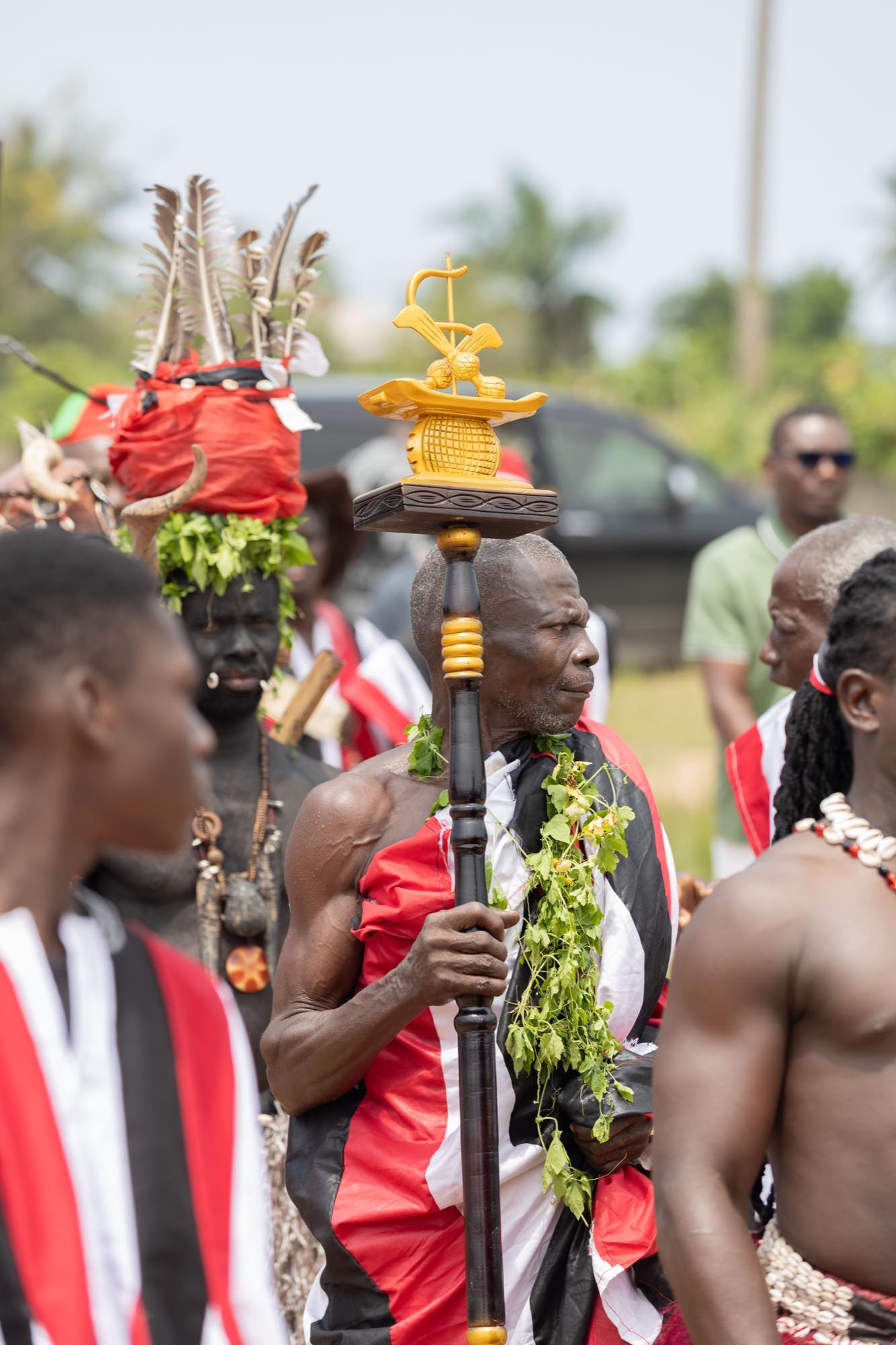
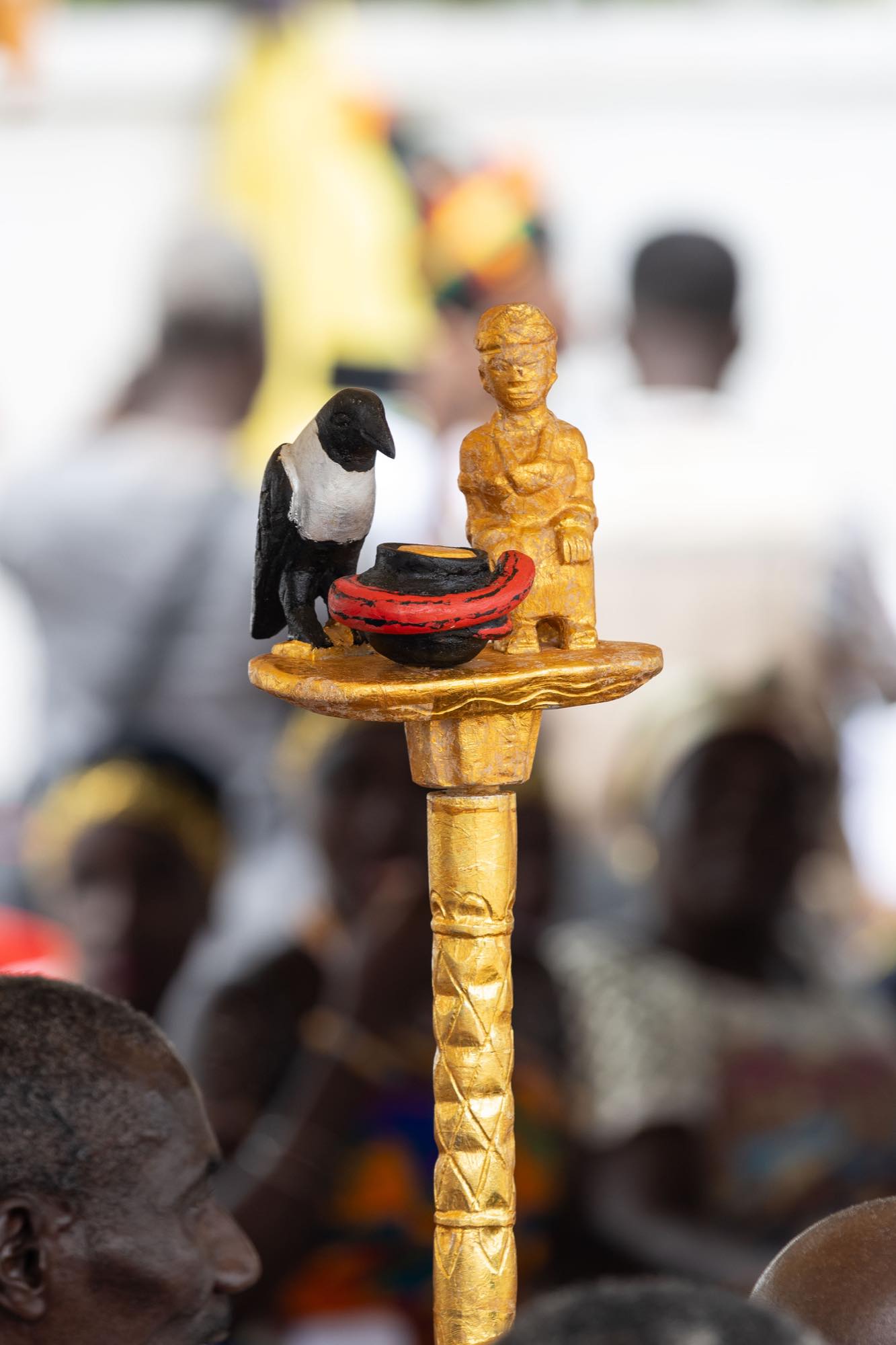


A procession of Akyeamefo with their staffs (poma) in hand © Museum Elmina
Photographs © Museum Elmina. Reproduction or redistribution requires written permission.
© Museum Elmina
Social Structure & Identity
Sources & Credits
Knowledge holders
-
Prof. Anthony Annan-Prah
-
Ebo Dadzie
How this knowledge was gathered
Oral history interviews recorded on video in Elmina, transcribed and curated by Museum Elmina for this page.
Recorded: August 2026, Elmina (on several days)
Curated by Museum Elmina